Definiteness of Purpose In Investing
Years ago, a friend named David left his full-time job to manage his retirement funds. Late fifties, intelligent, affable, very fit, quantitative. He had a plan: research first, then manage.
The research went well. Over two years, he produced work strong enough to win an international competition for active investment manager strategies. Real recognition from professionals in the field.
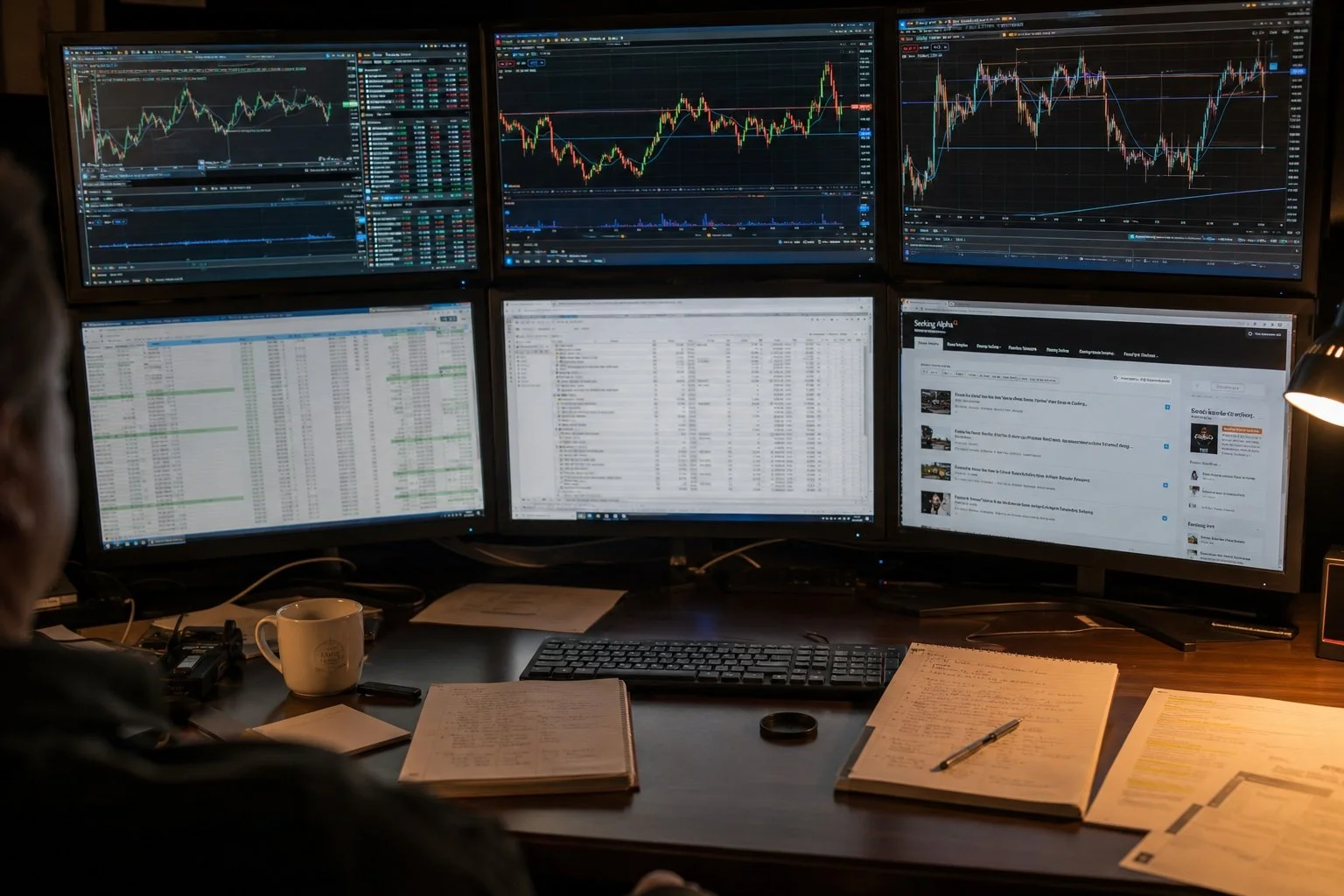
He kept researching. Still reading books, academic papers, the next promising paper after that. Still running simulations. Still building spreadsheets, still refining models. This went on for years.
He never finished his research. His account value never budged.
Are you researching, or are you drifting?
Drifting Looks Like Work
Never-ending research counts as one form of drifting. Others exist.
Napoleon Hill wrote Outwitting the Devil in 1938. He identified most people as drifters: reacting to circumstances rather than directing their lives. A small minority had something he called definiteness of purpose. They set goals, made plans, took action, adjusted when needed, and kept going.
The pattern translates directly to investing.
Drifting investors consume information. They switch strategies. They stay perpetually almost-ready. Purposeful investors know their target, follow their rules, accept imperfect outcomes, and keep going.
Here's the trap. Drifting often looks like productivity from the outside and feels like progress from the inside. Hours invested. Books read. Strategies compared. Webinars attended. The work feels serious because it matters. The problem isn't laziness or lack of intelligence. The work simply has nowhere to land.
The account stays level. The years pass.
Most drifters can't see themselves drifting. Here's how to check.
Three Signs You're Drifting
Sign 1: System Hopping
At the end of 2025, you bought broad-market index ETFs because momentum looked strong. In March, after a 6% drawdown, you sold most of that and rotated into dividend stocks for income and more stability. Now you're reading about covered calls and wondering about optioning those dividend positions.
The lie you tell yourself: I'm being adaptive.
The cost: no approach gets enough runway to work. You never learn whether the system failed or the timing went bad. Hopping replaces learning, and the next switch already takes shape.
Sign 2: Vague Goals
"I want to retire comfortably." "I want to grow my account." "I want enough to feel financially secure." No number attached. No date. No maximum drawdown you've agreed to tolerate. No quantification anywhere.
The lie you tell yourself: I'll figure out the details when I'm closer.
The cost: every decision floats. No strategy stands up against goals that don't exist. You can't tell whether you're succeeding, failing, or running out of time, with nothing to measure against.
I know what vague goals and weak strategies produce. I've written my share of both. I've also avoided writing anything down. My account didn't punish me immediately. It punished me slowly, by not growing the way it could have.
Sign 3: Analysis Paralysis
The backtesting platform sits open in one window. The spreadsheet with multi-tabbed parameter studies sits open in another. The decision has waited eight months, maybe longer.
The lie you tell yourself: I just need to be sure.
The cost: every year researching costs a year of compounding you can't recover. Markets don't pause while you read. The version of your account that would have existed if you'd started two years ago doesn't exist anymore, and it never will.
The Morning You Stop
The purposeful investor runs a systematic approach. Decisions happen on a defined schedule or for specific events, not in reaction to headlines.
One morning a month, she brews a cup of coffee. Opens the laptop. Checks the signals and executes one or two trades. Like checking the weather before a flight. Quick, routine, done in about five minutes. The coffee still steams when she closes the laptop.
That's the month.
No checking positions every day at lunch and again before bed. No CNBC in the background. No spreadsheet open in a second window. No second-guessing the investment position three days later when the market moves the other way.
A calm version of her made the decisions months ago, with the system she chose deliberately. This morning, she just executed.
She pours a second cup. Reads the news without flinching. Goes for a walk.
Purposeful investing targets outcomes you've defined in advance. Return and drawdown, together. Systematic investing offers one of the cleanest paths there, and we built SmartSignal as one approach. Others work too. The rules handle each month's call, which frees you from making the same decisions over and over.
Write the Sentence
Weak goals breed weak strategies. Weak strategies deliver weak results. Clarity sets the ceiling.
If you saw yourself anywhere in this article, you have one task.
An index card works better than a phone here. A physical card you can hold.
Write this sentence on it, filling in the blanks:
By age _____,
I want $__________
available for _______________________,
which requires roughly ____% annual return
and to get there, I can tolerate a maximum drawdown of ______%.
Some tape it to the monitor. Others prop it against the coffee maker. Somewhere it stays in view tomorrow morning.
The sentence doesn't have to be final. It has to be written. Drifters never get to written.
David has two options tonight. Open another spreadsheet tab. Or write the sentence.
Which version is you?
+++++++++++++++++
To receive helpful information like this for self-directed investors within 10-15 years of retiring, click here for our free weekly newsletter.
Important Disclosures
Past performance does not guarantee future results. Investing involves risk including the possible loss of principal.
The performance shown combines two different kinds of data. Results from January 2003 through December 2024 reflect backtested application of the SmartSignal methodology to historical price data. Results after January 2025 reflect actual signals delivered to subscribers during that period.
Backtested performance has inherent limitations. It does not represent actual trading. Backtested results benefit from hindsight and do not reflect the impact of trading costs, execution slippage, market liquidity, or the psychological pressures of investing real money during live conditions. For these reasons, backtested performance may differ materially from actual results. Individual subscriber results may also vary based on execution timing, account composition, and other factors.
TenHundred Co., its officers, employees, and partners may hold positions in the ETFs or securities referenced by the SmartSignal methodology, and may trade those positions without notice. TenHundred Co. reserves the right to modify or discontinue the methodology at any time, and past performance data may not reflect the current methodology.
Growth Guardian Investor publishes systematic investing education and methodology training under the publisher's exclusion to the Investment Advisers Act of 1940. We do not provide personalized investment advice. Subscribers make their own investment decisions.
Full Disclaimers Statement on www.gginvestor.com.