SmartSignal Report, Market Overview, Big Picture for November 2025
SmartSignal Performance
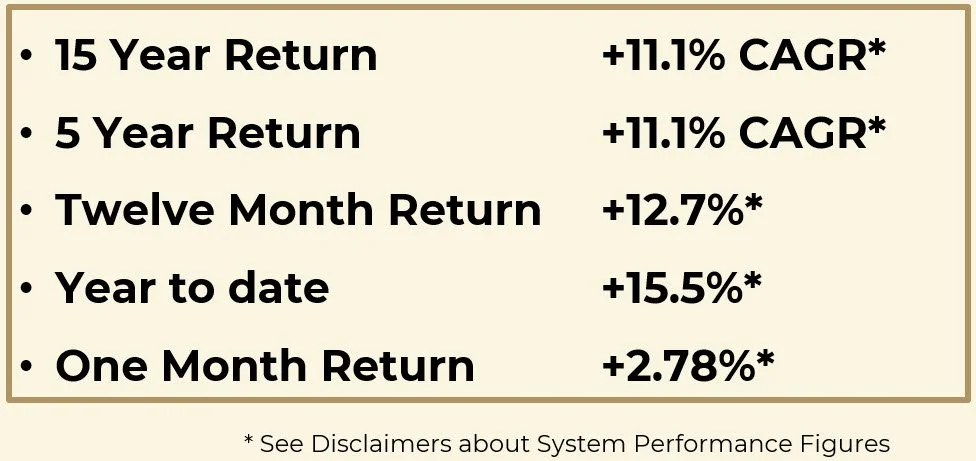
The SmartSignal System returned 2.58% in November – based mostly on the performance of one of its two holdings – gold. The yearly figures look strong, but our attention stays on the systematic approach and long-term results, which come from applying the rules month by month.
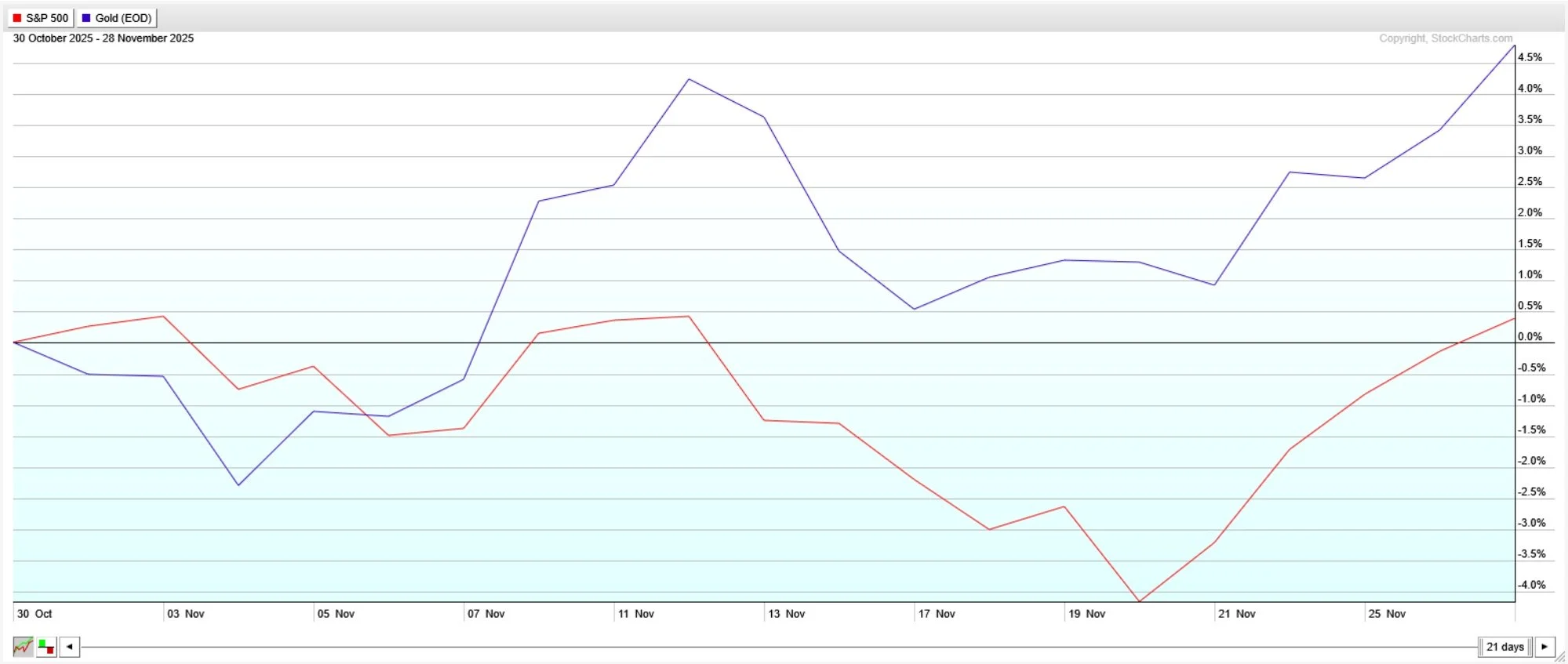
In the relative performance chart for the two holdings from last month below, you can see that the S&P index held relatively flat for the month. While gold started off with a dip, it wobbled its way to about a 5% gain.
Source: stockcharts.com
Market Overview
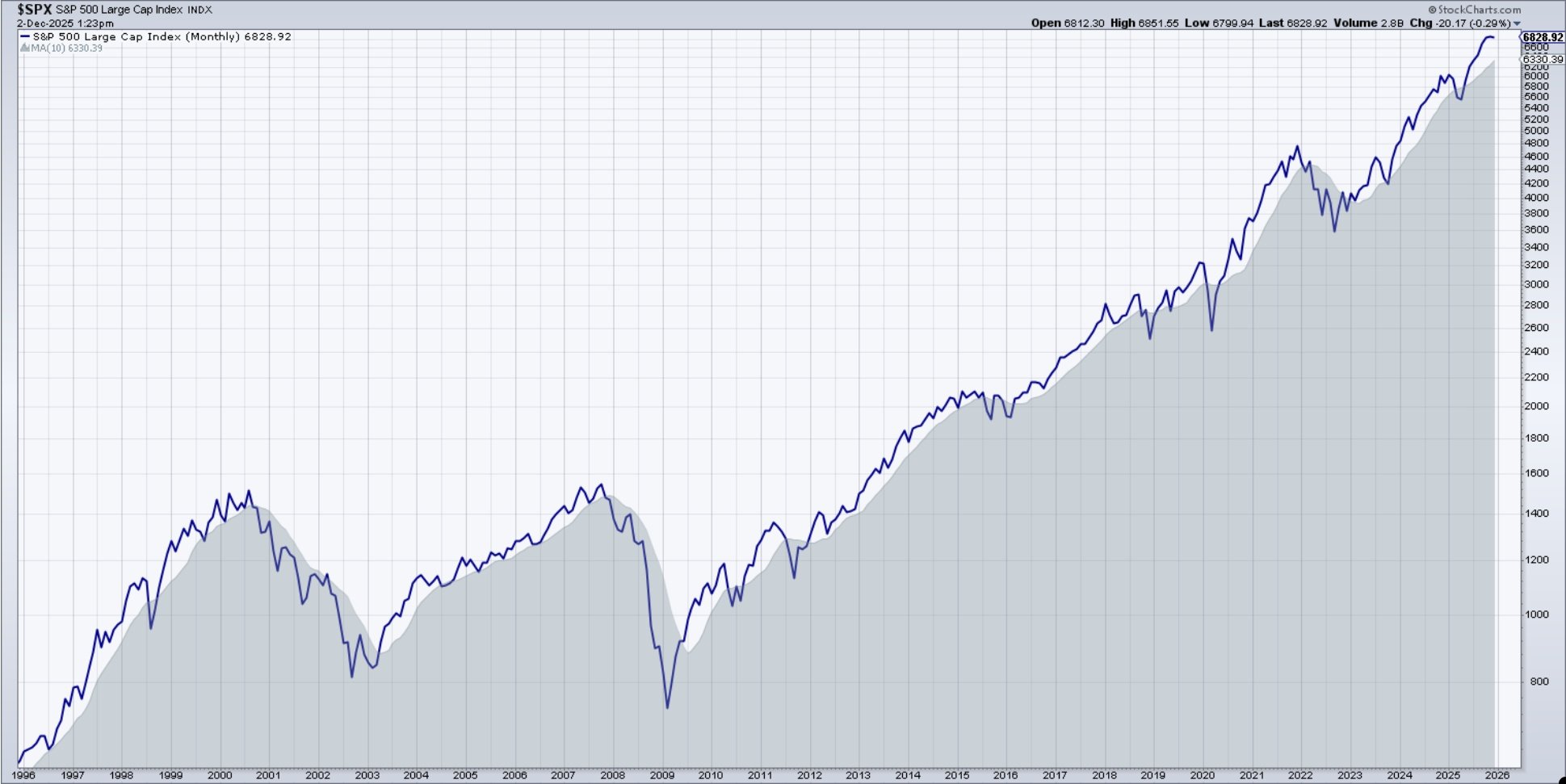
This month, I bumped the long-term chart from a 20-year view to 30 years. Having the last two big bear markets in view helps keep perspective on what's happened before.
Source: stockcharts.com
Currently, that line at the top right looks to be flattening. Does that mean the market flattens out or rolls over? Maybe. Or maybe it just keeps climbing. Three possibilities, no clear answer yet.
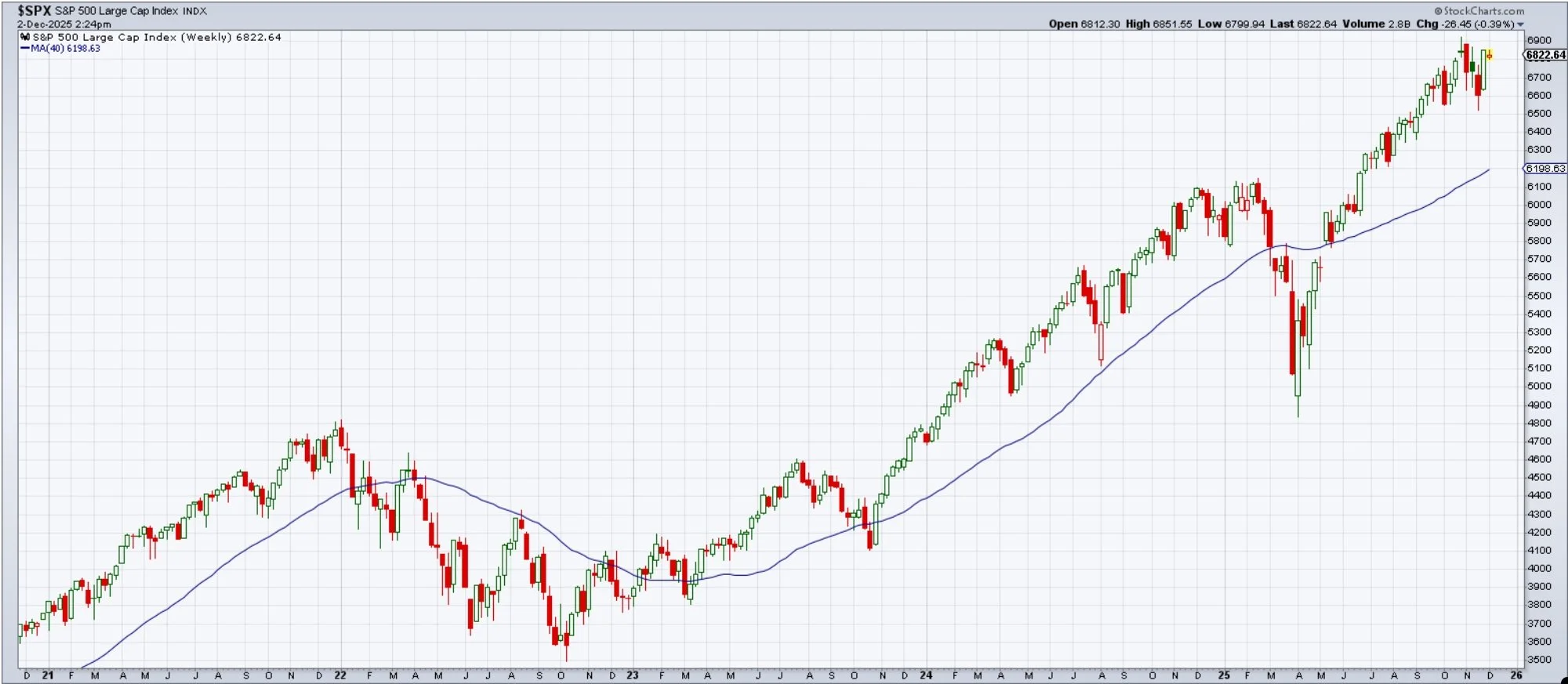
Source: stockcharts.com
The second chart covers only five years, and that “congestion zone” at the top right is what caused the line in the longer-term chart to flatten out
If we look at a number of indicators that help show which direction the market moves in the near term, they don't provide much help this month with an upward or downward bias. If we used a stoplight metaphor, we see a yellow light – nothing alarming but also little to boost confidence.
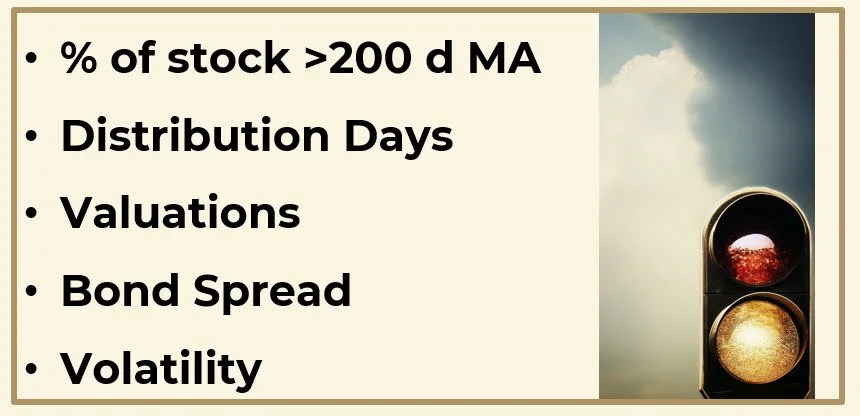
The best indicator? Price itself. Watch for the S&P to break above its Oct. 29 high of 6920 or below its Nov. 21 low of 6521. Until then, we're in sideways mode.
What does that mean for you? That depends. If you react to indicators, your gut, intuition, or instinct, you may be taking any number of actions presently.
Now, for investors who follow a systematic approach, all this reminds me of people discussing the weather – interesting conversation, but not terribly useful for deciding what to do today.
With a system like SmartSignal, you stay the course. We're free to let the market do what it does. When things get interesting enough to shift positions, the system gives the signal to make a move once each month. We focus on life.
Big Picture
Usually, this section covers some macro subject affecting the market. Due to some recent conversations, however, this month I wanted to go meta-macro if you will – I want to tell you about a book that spun my head around a little when I first read it: Die With Zero by Bill Perkins.
But before I get there, can I ask you something that might feel a little uncomfortable?
When you look at your portfolio balance, do you feel secure? Or do you feel like you need more before you can relax? And then, if I told you that feeling has almost nothing to do with the actual number in your account, would you believe me?
Here's something I learned working for a trading psychologist and working with thousands of traders and investors over the years: your relationship with money was written in childhood. What's more, you're still following that script, and you probably never realized it.
If you watched your parents stress about bills your whole childhood, you probably feel anxious no matter how much you've saved. If you watched a parent lose everything in a business failure or market crash, you may be hoarding cash you'll never need or be able to use. These aren't investing strategies – they're emotional survival patterns that made good sense when you were living under your parents’ roof. By midlife, however, they may have kept you from actually living a richer life.
The past remains the past and we're here. So let's talk about what to do with that insight now.
Which brings us to Die With Zero.
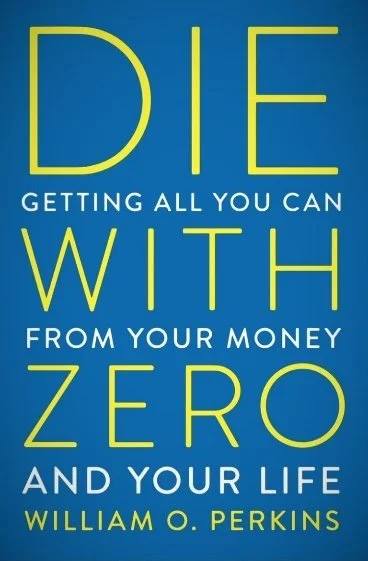
Perkins trades energy futures and has made a lot of money doing so. He takes a divergent position on many retirement-related subjects. For example, he completely reframes the thinking around annuities from horribly returning investment to possibly attractive income insurance.
He takes an unconventional, even radical stand about how much money to accumulate: the goal of having the most money when you die risks a life lacking zeal. Rather, a more fulfilling goal? Maximize life experiences while you can still enjoy them. He calls it optimizing for "memory dividends" – investing in experiences that pay compound interest in the form of stories you and your family tell and remember for decades.
Think about it: you've spent 20-40 years building wealth. But when's the last time you actually deployed it for something meaningful? A trip you keep postponing until retirement? Experiences with your kids before they launch their own lives? The time you're not spending with aging parents because you're grinding out another year of accumulation?
Perkins doesn't advocate recklessness. He's advocating intentionality. He's asking: what if you're so busy protecting yourself from the fears of scarcity your parents passed on subconsciously that you create a different kind of poverty in the process – an experience poverty?
The math of retirement planning remains critical. But the psychology of enough determines whether you can and will enjoy the life you've built. If you haven't done the self-work on your relationship with money, then your childhood money story did a great job to get you to this point, but it may have a pre-written ending.
When you consider the end of your money story, realize that you could write a different one now – one where you actually enjoyed the wealth you built instead of white-knuckling it to the end.
What would change if you believed you already had enough?
+++++++++++++++++
Want more guidance like this? The Growth Guardian Investor newsletter is free and built for self-directed investors approaching retirement.
Important Disclosures
Past performance does not guarantee future results. Investing involves risk including the possible loss of principal.
The performance shown combines two different kinds of data. Results from January 2003 through December 2024 reflect backtested application of the SmartSignal methodology to historical price data. Results after January 2025 reflect actual signals delivered to subscribers during that period.
Backtested performance has inherent limitations. It does not represent actual trading. Backtested results benefit from hindsight and do not reflect the impact of trading costs, execution slippage, market liquidity, or the psychological pressures of investing real money during live conditions. For these reasons, backtested performance may differ materially from actual results. Individual subscriber results may also vary based on execution timing, account composition, and other factors.
TenHundred Co., its officers, employees, and partners may hold positions in the ETFs or securities referenced by the SmartSignal methodology, and may trade those positions without notice. TenHundred Co. reserves the right to modify or discontinue the methodology at any time, and past performance data may not reflect the current methodology.
Growth Guardian Investor publishes systematic investing education and methodology training under the publisher's exclusion to the Investment Advisers Act of 1940. We do not provide personalized investment advice. Subscribers make their own investment decisions.
Full Disclaimers Statement on www.gginvestor.com.