When the World Feels Uncertain, Your Investment Process Shouldn't
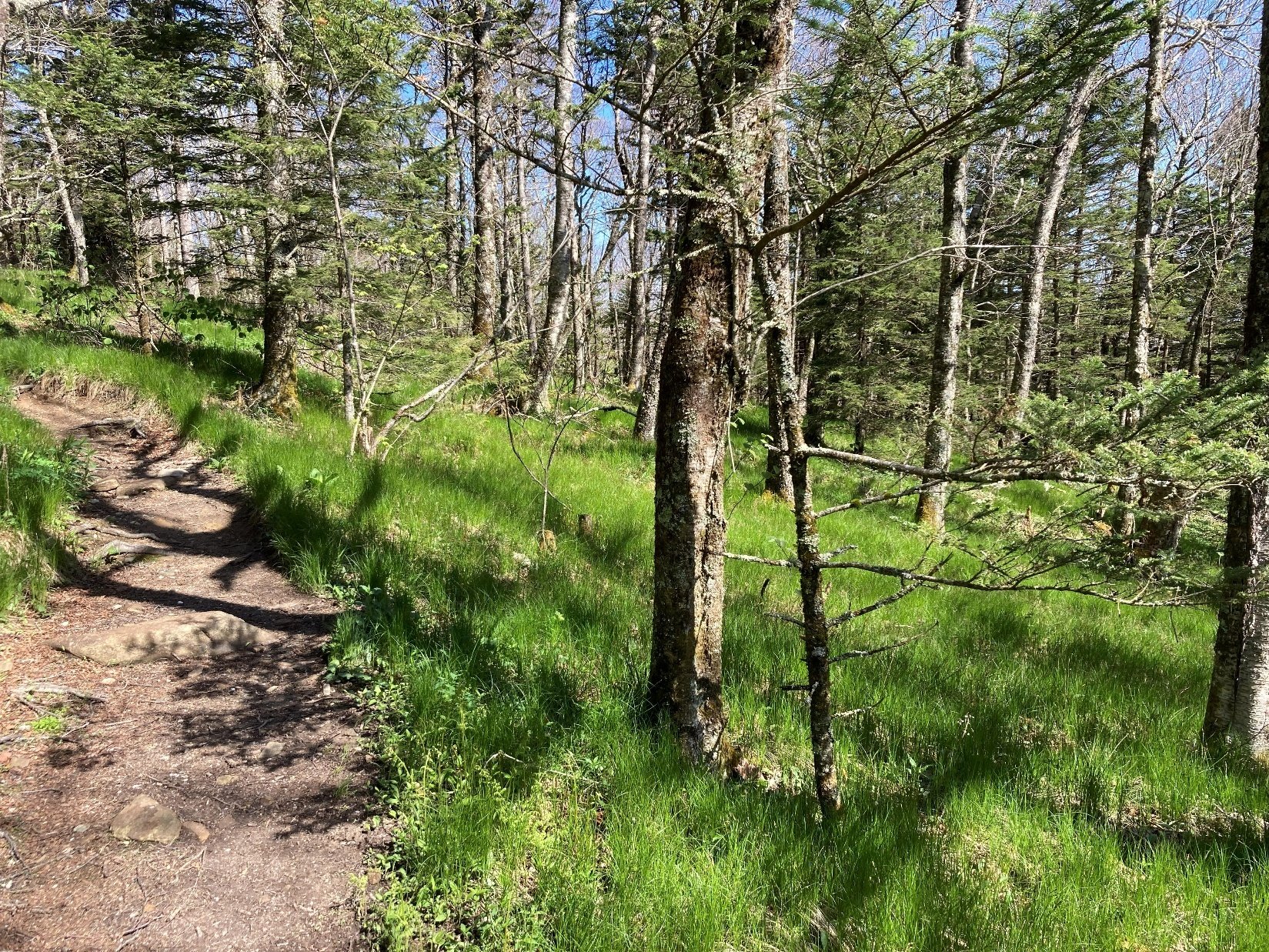
Tanawha Trail, East of Calloway Peak, Grandfather Mountain, NC, Source: Author
Last Sunday, I spent most of the day descending Grandfather Mountain after three days in the wilderness. Sketchy cell signals meant no news, no market updates, just wind, birds, and lots of footsteps.
Monday morning, I went online.
The torrent began immediately: Trump assassination attempt. Market bouncing back but with technical fragility. Hormuz blockade continuing. AI headlines unchanged, still promising to revolutionize, disrupt, and threaten everything.
The familiar anxiety crept back in. Four days in the mountains had given me a certain kind of clarity but now the information flooded in from every direction. Then I caught myself. All that information doesn't help me know what comes next. Actually, I don't need to know what comes next. Better information doesn't provide clarity. That comes from having a reliable process for responding to what actually does happen.
This Isn't New
On a recurring basis, investors face the same trifecta: geopolitical shocks, market volatility, and technological disruption.
1970s: The OPEC oil embargo paralyzed economies, markets crashed into stagflation, and personal computing began reshaping how business worked.
2000-2001: The dot-com bubble burst, wiping out trillions. Then 9/11 hit. Meanwhile, the internet fundamentally reshaped how we shopped, communicated, and consumed information.
2020: A pandemic shut down the world, markets experienced the fastest bear market and recovery in history, and remote work scaled globally almost overnight.
Past performance doesn't guarantee future results, but the pattern is clear: uncertainty remains constant, not the exception.
Technology anxiety seems to follow the same script. Each generation believed their disruption was uniquely threatening: railroads, electricity, radio, automobiles, television, computers, and the internet. And now, AI feels uniquely threatening to us. It represents cognitive disruption, threatening not just jobs but how we think about intelligence itself.
What You Can Actually Control
When anxiety hits, we ask: "Should I do something?" That question doesn’t really help. The better question is: "What does my process tell me to do?"
We can't control what happens in DC, how the Iran situation resolves, what AI capabilities emerge, or whether the market's bounce holds. I can't predict which industries AI disrupts the most, but I don't need to. Trying to control events or predict what's next won't make us better investors. It makes us anxious investors.
We control everything that matters: our investment process, our risk management, and our emotional responses.
A systematic approach means you decided what to do before the crisis, not during it. Rules that reduce exposure when volatility spikes don't require predicting whether markets will fall. They respond to the volatility. Systems that lock in gains don't need your opinion about tops. They act on price behavior. You already know what you'll do.
As Ray Dalio writes in Principles, this is exactly when systematic decision-making matters most. When uncertainty and emotion run high, following principles you established in calmer times keeps you from making reactive mistakes. When I don't know what happens next, and I never do, I rely on rules responding to current conditions. AI will change markets and industries, but it won't change the need for disciplined process. If anything, rapid change makes systematic discipline more critical.
The advantage isn't better predictions about the future. It's better preparation for uncertainty.
What I Did Monday Morning
After minimal unpacking Sunday night, I showered and collapsed into bed. Four days on the trail left me exhausted. I didn't even see a computer screen. I didn't do anything except get some great sleep.
Monday morning brought the cascade. Old temptations surfaced: Should I adjust positions? Deploy cash? Hedge?
What I actually did? Nothing.
Because my investment process doesn't require daily or even weekly action. I use the SmartSignal System, a monthly systematic service I helped create for this exact purpose. Once a month, SmartSignal provides systematic signals based on the framework I've developed. The system doesn't promise winning months; it promises process consistency
Monday morning brought no alerts, no triggers, no required action.
Yet Monday morning, the fear still surfaced. A systematic approach hasn't eliminated fear; it just eliminated the temptation to act on any anxiety. I didn't have to exercise any self-will; the system design makes it relatively easy to act when I need to and to sit on my hands when I don't. The relief came from trusting I'd know when I needed to act.
I can't predict what AI will displace but my system will tell me what to do on the last trading day of the month. Until then, I do nothing. The best systematic approach doesn't demand daily heroism. It removes temptation entirely.
Back to the Mountains
On Grandfather Mountain, simplicity ruled. One step, then the next. Stay on the trail. The forecast provided little help because weather there famously arrives on its own schedule. When the rain came, we put on raingear and returned to the trail. One step, then the next.
Investing follows the same pattern: having a system that responds to conditions as they develop rather than predicting the next thing. Building adverse conditions into the plan from the start.
The assassination attempt still happened. Hormuz remains blockaded. AI headlines still scream disruption. But I'm not paralyzed by any of it because I don’ try to predict which shoe drops next. I follow a process that tells me when conditions warrant action.
I can't tell you what the market will do next week, how AI will reshape the economy, or whether geopolitical tensions will ease. But the only reliable source of calm in uncertain times comes from a process I trust and follow. Better preparations rather than better predictions.
I may head out to hike a section of the Appalachian Trail in May. Next month, the world will remain uncertain. But I'll have SmartSignal running. And that gives me everything I need.
+++++++++++++++++
Want more guidance like this? The Growth Guardian Investor newsletter is free and built for self-directed investors approaching retirement.
Important Disclosures
Past performance does not guarantee future results. Investing involves risk including the possible loss of principal.
The performance shown combines two different kinds of data. Results from January 2003 through December 2024 reflect backtested application of the SmartSignal methodology to historical price data. Results after January 2025 reflect actual signals delivered to subscribers during that period.
Backtested performance has inherent limitations. It does not represent actual trading. Backtested results benefit from hindsight and do not reflect the impact of trading costs, execution slippage, market liquidity, or the psychological pressures of investing real money during live conditions. For these reasons, backtested performance may differ materially from actual results. Individual subscriber results may also vary based on execution timing, account composition, and other factors.
TenHundred Co., its officers, employees, and partners may hold positions in the ETFs or securities referenced by the SmartSignal methodology, and may trade those positions without notice. TenHundred Co. reserves the right to modify or discontinue the methodology at any time, and past performance data may not reflect the current methodology.
Growth Guardian Investor publishes systematic investing education and methodology training under the publisher's exclusion to the Investment Advisers Act of 1940. We do not provide personalized investment advice. Subscribers make their own investment decisions.
Full Disclaimers Statement on www.gginvestor.com.